
Vulcan Reference Manual

  • Welcome to Vulcan
  • Production Workflow
    • Preparation
    • Jogging and Homing
    • Create
    • File Management
    • Select Program
    • Edit NC Code
    • Edit Laser Technology
    • Edit layout
    • Simulation run
    • Work offsets
    • Run
    • Re-entry
  • Laser Technology Tables (LTT)
    • Terminology
    • Laser Data items
      • Piercing
      • Multistage Piercing
      • Cutting
      • Special Processes
    • Modifying Laser Data
    • LTT Management
    • Ramp Cycles
    • FlyCut
    • Acceleration while cutting (DCA)
  • Technology functions
    • Vaporize Sheet
    • Nanojoints
    • PierceLine Sensor
    • Frog Jumping
    • Analog Gas Calibration
    • Cutting Tools
    • Dynamic Focus Control (DFC)
  • Control Elements
    • Lubrication Cycle
    • Protective Glass Monitoring
    • Scrap Cut
    • Go To Sheet Origin
    • Height Sensor Calibration
    • Nozzle Centre
    • Target Shot
    • Gas Purge
    • HC Manual Set Point
    • Go To Park Position
    • Nozzle Clean & Height Sensor Calibration
    • Edge Detection
    • Focus Comb
    • Focal Distance
    • Pilot Diode Positioning
  • Production plan
    • Create a production plan
    • Modification
    • Run a production plan
    • Running sequence
    • sheet loading
    • Material stock
  • Advanced functionality
    • Nozzle Changer
    • Pallet changer settings
    • Status light
    • Suction cup layout
    • Automation Interface
    • KL59, Laser & Optics
    • Automated corner optimization
  • Programming manual
    • DIN Programming
    • LST Programming
  • Machine configuration
    • Laser database
    • Work offsets
    • Machine settings
  • Service settings
    • General settings
      • Log files
      • Backup settings
    • Calibration of the pilot laser
    • Service settings
    • PLC functions for service's maintenance/ repair work for KL59
    • DCA settings
    • Info messages
  • Troubleshooting
    • Installation
    • Work offset
    • Error data, backup, restore
    • Frequent collisions
    • Laser issues
    • extreme small contours
Machine configuration
/
Laser database

Laser database

To show LTT data in Vulcan, change the “Machine Database Type” from Defaults to Trumpf LTT. Then Vulcan read LDM-Cloud_TC49.XML which is generated from Trumpf’s Laser Database Management (LDM) and show the LTT data. User can edit the required laser parameter values for each page.
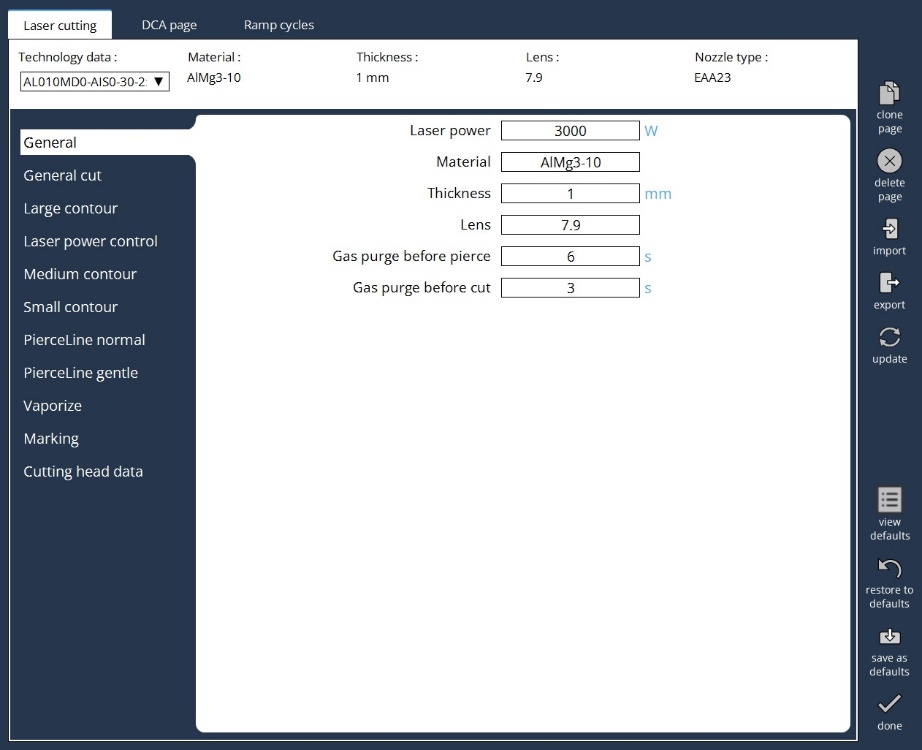
Laser database page

Selecting the field opens a numerical keyboard. Using this we can enter the values for the parameters.
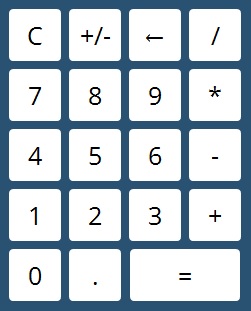
Numeric input screen
  • Clone page : User can clone a current laser page parameters and create a new laser page with different material, thickness, lens and nozzle type.
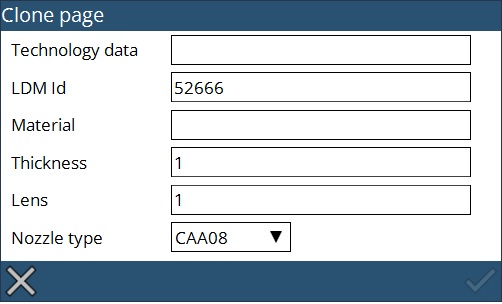
Clone page
  • Delete page : User can delete a laser page which is not required.

  • Import : User can import a new laser data LDM-Cloud_TC49.XML by selecting the respective directory.
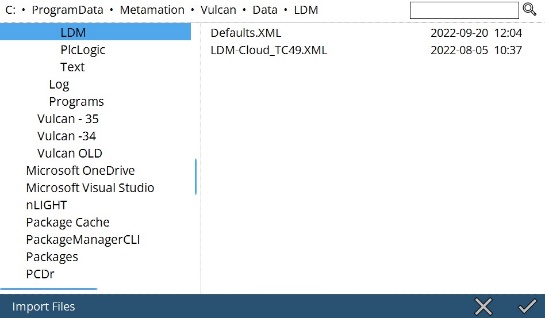
Import window
  • Export : User can export a current laser data LDM-Cloud_TC49.XML by choosing the respective directory to save it.

  • Update : User can select this button to update LTT. This updated new LTT will replace “TrumpfDefaults.XML” file and Add new LTT table and data to LDM-Cloud_TC49.XML and Defaults.XML files.

  • View defaults : User can select this button to View default values of the parameter which stored in Defaults.XML files, if the parameter is different from default values.
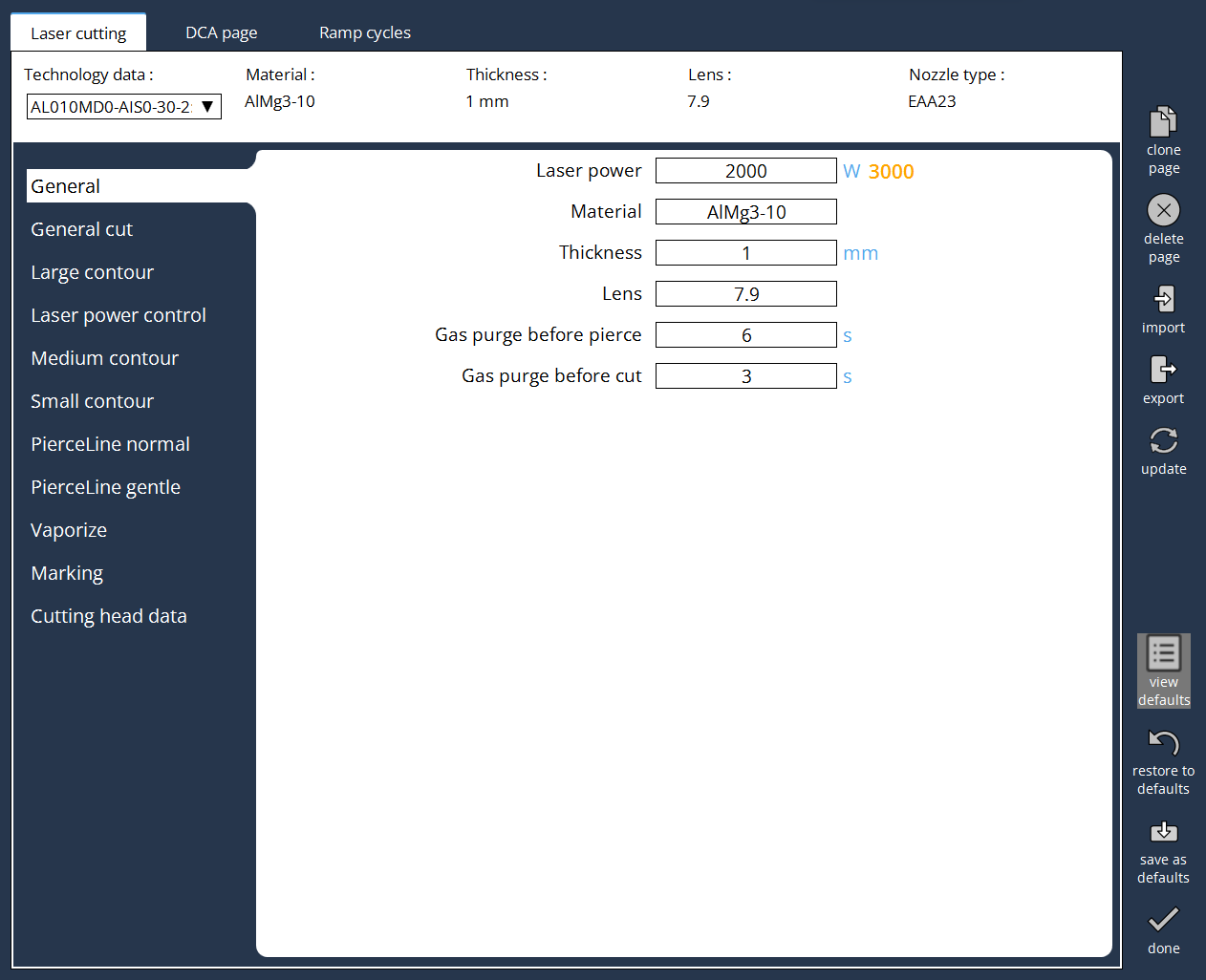
View defaults

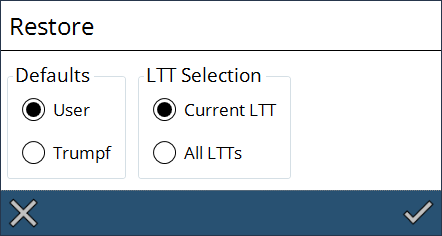
  • Save and Restore defaults : User can save the values as defaults either for "current" or "all LTT’s" and restore later from "user" or "Trumpf defaults".
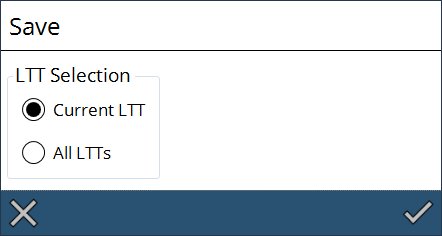
Save defaults

Restore defaults

  • Done : Saves all the changes.

  • Ramp cycles : Vulcan read LDM-Cloud_TC49.XML which contains ramp cycles information and show the ramp cycle data as follows.
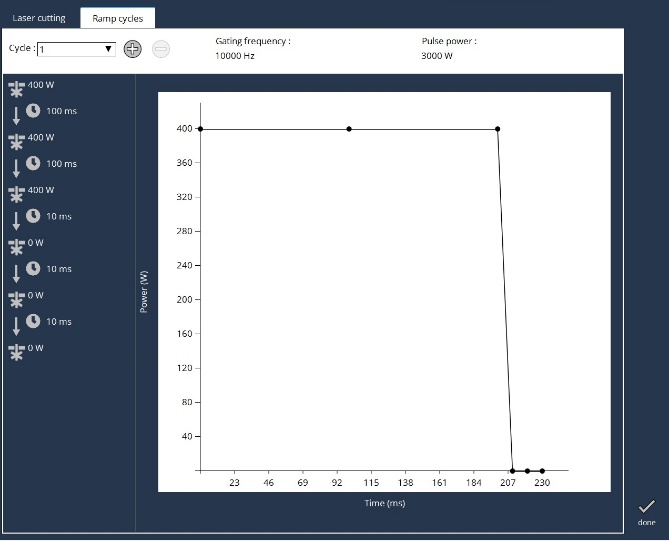
Ramp cycles page

With reference to Trumpf LTT, the Ramp cycle parameters are used for the Piercing. A maximum of 199 ramp cycles are available in which from 181 to 199, customer can use it.

Machine configuration Work offsets

      Copyright © 2024 by Trumpf-Metamation. All rights reserved.

    Compiled by Bento